
"have flavor"
60000 article(s) found

There are so many flavors of coffee, how many kinds of coffee have you drunk? How many flavors do you have in coffee? All kinds of coffee
The overall flavor of coffee is constructed by water-soluble taste, volatile aroma and tasteless taste, which can be appreciated by taste, smell and touch. Others simply write the coffee flavor into the following equation: flavor = volatile aroma, water-soluble taste, taste = dry and wet, sour, bitter, salty, smooth and astringent = pre-nasal and post-nasal olfactory, oral taste

Does coffee really have so many flavors? How to learn to distinguish the flavor of coffee? 85 flavors of coffee
Guide to individual coffee is becoming more and more popular. when the barista gives you a cup of fragrant coffee with a flavor description card, you look at the small card while drinking coffee, and you can't help thinking that this cup of coffee really has so many flavors. I can't taste the flavor written on this card! The flavor of coffee is unimaginable. Scientists have isolated more than 850 combinations from a cup of black coffee.

Mellow, flavor and sweetness have the flavor, characteristics, taste and manor of Latin American coffee.
Latin America (Latin America) in 1721 French naval officer de Klee (Gabriel Mathieu de Clieu) experienced difficulties and obstacles to bring the first coffee sapling from Africa to the Latin American island of Martinique, which was the origin of coffee cultivation in Latin America. Because at that time, France was under the reign of the Bourbon dynasty, and Elaraby was grown in Latin America.

A brief introduction to the description of flavor and aroma characteristics of Latin American coffee with excellent balanced performance
Nicaragua (Nicaragua) aroma 3.5 minutes brightness 4 mellow flavor 4 points aftertaste 4 points suitable for baking: people who like deep-baked taste of City/Full city can try Jinotega and Matagalpa, baking the second burst when the beans are dense, the flavor is thick but well balanced, with a strong bittersweet, non-

Description of roasting degree and Flavor of Sidamo Coffee beans introduction to the characteristics of Grinding scale production area
Description of roasting degree of Sidamo Coffee beans Flavor description the characteristics of grinding scale production area the coffee flavor treated by water washing is not easy to have wild flavor and has the characteristics of purity and freshness, which is suitable for the roasting degree from City to Full City. In some Ethiopian water-washed coffee beans with excellent nature, obvious aromas of lemon, citrus essential oils and jasmine can be detected.

Flavor Guide to Coffee Origin: Africa, Asia, America
Finely speaking, the flavor of each type of coffee bean is different, even with each handshake and each Italian extraction, because of the changes in the environment, man-made and the bean itself. But we always say that Ethiopian beans have citrus fruit flavors and delicate floral scents, while Kenyan beans have bright acidity and dry blabla. The former is different.
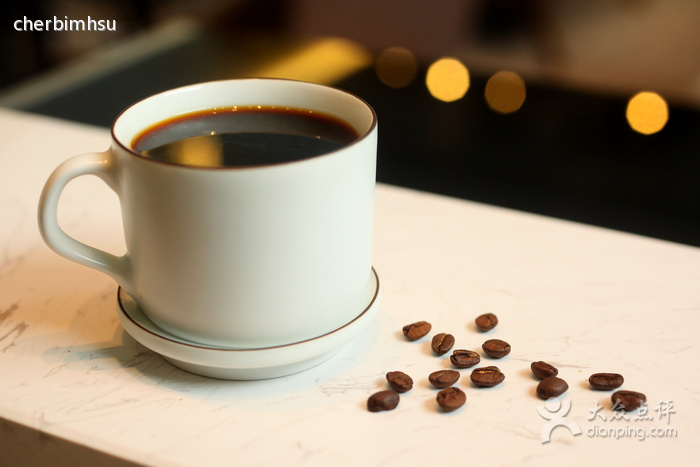
Mellow and sweet three have the characteristics of Latin American coffee varieties, taste, manor boutique coffee and bean flavor.
Latin America (Latin America) in 1721 French naval officer de Klee (Gabriel Mathieu de Clieu) experienced difficulties and obstacles to bring the first coffee sapling from Africa to the Latin American island of Martinique, which was the origin of coffee cultivation in Latin America. Because at that time, France was under the reign of the Bourbon dynasty, and Elaraby was grown in Latin America.

Coffee rookie doubt? Why do the same coffee beans have different flavors?
Professional coffee knowledge exchange more coffee bean information Please pay attention to the coffee workshop (Wechat official account cafe_style) hand-brewed coffee is very popular because it has a sense of ritual, experience and personality, and high playability. In this era of standardization and mass production, we need such products to give us a place where we can still feel the unique charm, that is, boutique coffee shops. However, very

How to taste Coffee Flavor understand Coffee Taste Wheel to improve Coffee Flavor sensitivity
First of all, you have to learn to distinguish between different boutique coffees that taste and smell different, so you have to drink two different kinds of coffee at the same time. Wait until you have a way to tell the similarities and differences between the two kinds of coffee, then learn the details of a single cup of coffee. You can do this in many ways, such as finding a coffee shop with a convenient distance and a variety of items.

A brief introduction to the Market Price of Latin American Fine Coffee Bean varieties with thick Flavor
Guatemala (Guatemala) aroma 3.5 minutes brightness 4.5 minutes mellow 3.5 minutes flavor 4.5 minutes aftertaste 4.5 points suitable for baking: Light/Medial/City shallow roasting, city degree can best show the characteristics of Guatemalan coffee, too deep will reduce the fruit flavor, if you like the smoky flavor, you can bake close to the second explosion, but still do not enter the second explosion as the principle. Because of beauty

A brief introduction to the description of flavor, taste and aroma characteristics of Latin American boutique coffee beans with thick sweet taste
El Salvador (El Salvador) aroma 4 minutes brightness 4.5 minutes mellow 3 points flavor 4.5 points aftertaste 4.5 points suitable for baking degree: if City/Full city city has a preference for heavy flavor, you can bake it a little deeper. Most people think of El Salvador as a place with frequent wars, but it is true that years of civil war have made El Salvador's coffee beans

Overall flavor to balance Latin American coffee flavor, characteristics, taste and manor introduction
Latin America (Latin America) in 1721 French naval officer de Klee (Gabriel Mathieu de Clieu) experienced difficulties and obstacles to bring the first coffee sapling from Africa to the Latin American island of Martinique, which was the origin of coffee cultivation in Latin America. Because at that time, France was under the reign of the Bourbon dynasty, and Elaraby was grown in Latin America.

The overall flavor is balanced to show a stable Latin American coffee flavor, character, taste and estate
Latin America In 1721, Gabriel Mathieu de Clieu, a French naval officer, took the first coffee sapling from Africa to Martinique in Latin America, which is the origin of coffee cultivation in Latin America. Because France was under Bourbon rule at the time, Arabi cultivated in Latin America

A brief introduction to the cultivation of Latin American boutique coffee beans with thick flavor, geographical location, climate and altitude
Guatemala (Guatemala) aroma 3.5 minutes brightness 4.5 minutes mellow 3.5 minutes flavor 4.5 minutes aftertaste 4.5 points suitable for baking: Light/Medial/City shallow roasting, city degree can best show the characteristics of Guatemalan coffee, too deep will reduce the fruit flavor, if you like the smoky flavor, you can bake close to the second explosion, but still do not enter the second explosion as the principle. Because of beauty

The overall flavor is introduced by balanced Latin American coffee flavor, characteristics, taste and manor.
Latin America (Latin America) in 1721 French naval officer de Klee (Gabriel Mathieu de Clieu) experienced difficulties and obstacles to bring the first coffee sapling from Africa to the Latin American island of Martinique, which was the origin of coffee cultivation in Latin America. Because at that time, France was under the reign of the Bourbon dynasty, and Elaraby was grown in Latin America.

The overall flavor is balanced with a stable Latin American coffee flavor, characteristics, taste and manor.
Latin America (Latin America) in 1721 French naval officer de Klee (Gabriel Mathieu de Clieu) experienced difficulties and obstacles to bring the first coffee sapling from Africa to the Latin American island of Martinique, which was the origin of coffee cultivation in Latin America. Because at that time, France was under the reign of the Bourbon dynasty, and Elaraby was grown in Latin America.

A brief introduction to the history and culture of the origin and development of Latin American boutique coffee beans with thick flavor
Guatemala (Guatemala) aroma 3.5 minutes brightness 4.5 minutes mellow 3.5 minutes flavor 4.5 minutes aftertaste 4.5 points suitable for baking: Light/Medial/City shallow roasting, city degree can best show the characteristics of Guatemalan coffee, too deep will reduce the fruit flavor, if you like the smoky flavor, you can bake close to the second explosion, but still do not enter the second explosion as the principle. Because of beauty

The overall flavor is balanced by the excellent flavor, characteristics, taste and manor of Latin American coffee.
Latin America (Latin America) in 1721 French naval officer de Klee (Gabriel Mathieu de Clieu) experienced difficulties and obstacles to bring the first coffee sapling from Africa to the Latin American island of Martinique, which was the origin of coffee cultivation in Latin America. Because at that time, France was under the reign of the Bourbon dynasty, and Elaraby was grown in Latin America.

The overall flavor shows the flavor, characteristics, taste and manor of Latin American coffee with excellent balance.
Latin America (Latin America) in 1721 French naval officer de Klee (Gabriel Mathieu de Clieu) experienced difficulties and obstacles to bring the first coffee sapling from Africa to the Latin American island of Martinique, which was the origin of coffee cultivation in Latin America. Because at that time, France was under the reign of the Bourbon dynasty, and Elaraby was grown in Latin America.

A brief introduction to the description of the flavor, taste and aroma characteristics of Latin American boutique coffee beans
As the United States is deeply involved in coffee agriculture and is heavily exploited, huge North American multinational groups control most of the producing areas and produce low-altitude, low-quality coffee at very low wages. These shoddy coffees don't represent real Guatemalan coffee. In fact, the planting conditions in Guatemala are unique, and many producing areas have ideal altitude, soil and climatic conditions, so